Pharmacy Math
Course Objective
Students will understand and become proficient in the calculations that may be encountered in the practice of Pharmacy. Students will understand and become proficient in the calculations described in each (covered) Chapter of the 'Textbook'.
Instructor: David W.A. Bourne, Ph.D.
E-mail Address
Textbooks
Pharmacy Math - Part 1 (Modules 1-4)
and Part 2 (Modules 5-8)
Other text that may be of interest
Pharmaceutical Calculations, 2006, 12th ed, by H.C. Ansel and M.J. Stoklosa, Lippincott Williams & Wilkins ISBN 0-7817-6265-0 and other versions
Pharmaceutical Calculations, 2005, 4th ed., by J. L. Zatz and M. G. Teixeira, Wiley, Hoboken, NJ ISBN 0-471-43353-5
Understanding Pharmacy Calculations, 2002, by T. A. O'Sullivan, American Pharmaceutical Association, Washington, DC ISBN 1-58212-033-1
Pharmaceutical and Clinical Calculations, 2000, 2nd ed., by M. A. Khan and I.K. Reddy, Technomic, Lancaster, PA ISBN 1-56676-812-8
Proctor & Gamble Pharmacists's Handbook, 1998, by D.B. Worthen, Technomic, Lancaster, PA ISBN 1-56676-667-2
Course Outline - Topics Covered 
12th Edition - 13th Edition
- Module 1
1. Fundamentals of Measurement and Calculation (pp 1-24, pp 1-18)
3. Pharmaceutical Measurement (pp 39-50, pp 35-48)
- Module 2
2. International System of Units (pp 25-38, pp 19-34)
4. Interpretation of Prescription and Medication Orders (pp 51-66, pp 49-68)
Appendix A. Common Systems of Measurement and Intersystem Conversion (pp 349-360, pp 371-384)
- Module 3
5. Density, Specific Gravity and Specific Volume (pp 67 - 78, pp 69-80)
- Problem c05/c0504 - Calculate the specific gravity of a liquid using a specific gravity bottle
- Problem c05/c0505 - Calculate the specific gravity of an object weighed in air and water
- Problem c05/c0506 - Calculate the specific gravity of an object weighed in air and an oil
6. Percentage, Ratio Strength and other Expressions of Concentration (pp 79-98, pp 81-102)
- Module 4
7. Calculation of Doses: General Considerations (pp 99-114, pp 103-120)
8. Calculation of Doses: Patient Parameters (pp 115-134, pp 121-142)
16. Reducing and Enlarging Formulas (pp 263-270, pp 279-286)
- Problem c16/c1608 - Quantities of ingredients required (in metric) for a prescription (in avoirdupois)
- Problem c16/c1610 - Quantities of ingredients required (in metric) for a prescription (in parts)
- Module 5
9. Some Calculations Involving "Units," "µg/mg" and Other Measures of Potency (pp 135-142, pp 153-166)
10. Selected Clinical Calculations (pp 143-156, pp 153-166)
- Problem c10/c1002 - Calculate the patient's creatinine clearance based on body surface area
- Problem c10/c1003 - Calculate fluid concentration, the time it would take to give the full dose and the dose in units per kg per min
- Problem c10/c1004 - An iron replacement calculation
13. Intravenous Infusions, Parenteral Admixtures and Rate-of-Flow Calculations (pp 195-212, pp 205-226)
- Module 6
11. Isotonic and Buffer Solutions (pp 157-176, pp 167-186)
- Problem c11/c1102 - Calculate the amount of sodium chloride required to make an eye drop isotonic
- Problem c11/c1104 - Calculate the amount of sodium chloride required using freezing point depression data
12. Electrolyte Solutions, Milliequivalents and Milliosmoles (pp 177-194, pp 187-204)
- Module 7
15. Dilution, Concentration and Alligation (pp 235-262, pp 251-278)
20. Calculation of Active Drug Moiety (pp 303-310, pp 325-332)
- Module 8
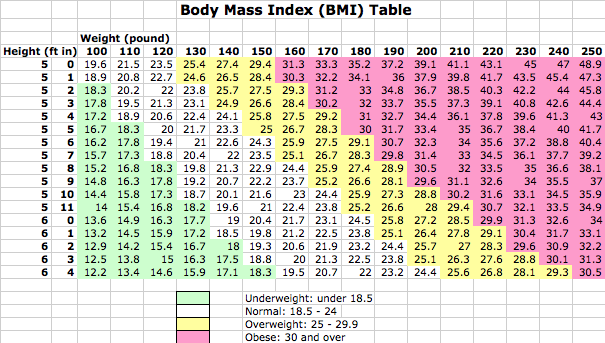
14. Enteral and Parenteral Nutrition, Body Mass Index and the Food Nutrition Label (pp 213-234, pp 227-250)
17. Selected Calculations in Contemporary Compounding (pp 271-290, pp 287-310)
Online Resources:
Students should log on to this class at the following website http://www.boomer.org/c/m/ at the beginning of each week to view the current Practice problems and/or Exam. The materials may be accessed from any computer with internet access as frequently as needed. It will be the student's responsibility to review the material, complete the practice problems, and review the solution key on a weekly basis.
Possible Course Policies
Class will meet once per week for lecture/tutorial/help sessions. Attendance at all class sessions is encouraged. The other meeting time will be used as an exam period.
Evaluation will be by exam only. Therefore students will need to read ahead and be ready to understand and ask about material during class time. Some problems may be worked during class and it would be a help if student brought a calculator to class time. Lecture material will be taken directly from the textbook so it would also be helpful if students brought their textbook to each class as well.
Module exams will be held once a week. A maximum of two modules may be attempted each week AND the 50 minutes class time limit will be strictly adhered to. Answers must be correct (within 1%) with the correct units for any credit. Scratch paper will be provided so you may work through a problem. However, only answers entered on the exam page in the answer space will be graded. You should keep your scratch paper for review after the exam is graded and returned. The student is only allowed to have a pen, pencil, eraser with them during the exam. A standard calculator will be provided to each student for use in the exam. Coats, jackets, hats (including ball caps), calculators, Palm and other PDA devices, computers, cell phones, pagers, papers, backpacks, briefcases, etc, MUST be placed at the front of the classroom prior to the exam start. Students who leave the exam room during the exam will not be allowed to re-enter the room until the last student has completed their exam.
- Module exams must be attempted in numerical sequence
- No more than two modules may be attempted on each exam day and the first module must be turned in before starting the second module
- Students may choose to not turn in an exam module
A score of 90% will be required on each module to pass (9 of 10 questions). The grade will be based on the number of attempts required to pass all eight modules. Passing all modules is required to receive a grade of A, B or C. The number of attempts required to pass all the modules will determine the grade (A, B or C) you will receive. Practice using the links below before attempting a module.
| Grade |
Number of Missed Attempts Allowed |
| A |
1 |
| B |
3 |
| C |
All modules passed |
| F |
Failure to pass all 8 modules |
References
- Bourne, D.W.A. and Davison, A.M. 2006 A Self-paced Course in Pharmaceutical Mathematics Using Web-based Databases, Amer. J. Pharm. Ed., 70(5), Article 116 - PDF Document
- Brown, M.C. 2003 Introduction to Pharmaceutical Calculations, Amer. J. Pharm. Ed., 67(2), Article 38 - PDF Document
This page (http://www.boomer.org/c/m/) was last modified: Monday, 20th Jul 2026 at 4:25 pm
Material on this website should be used for Educational or Self-Study Purposes Only
Copyright © 2001-2020 David W. A. Bourne (david@boomer.org)